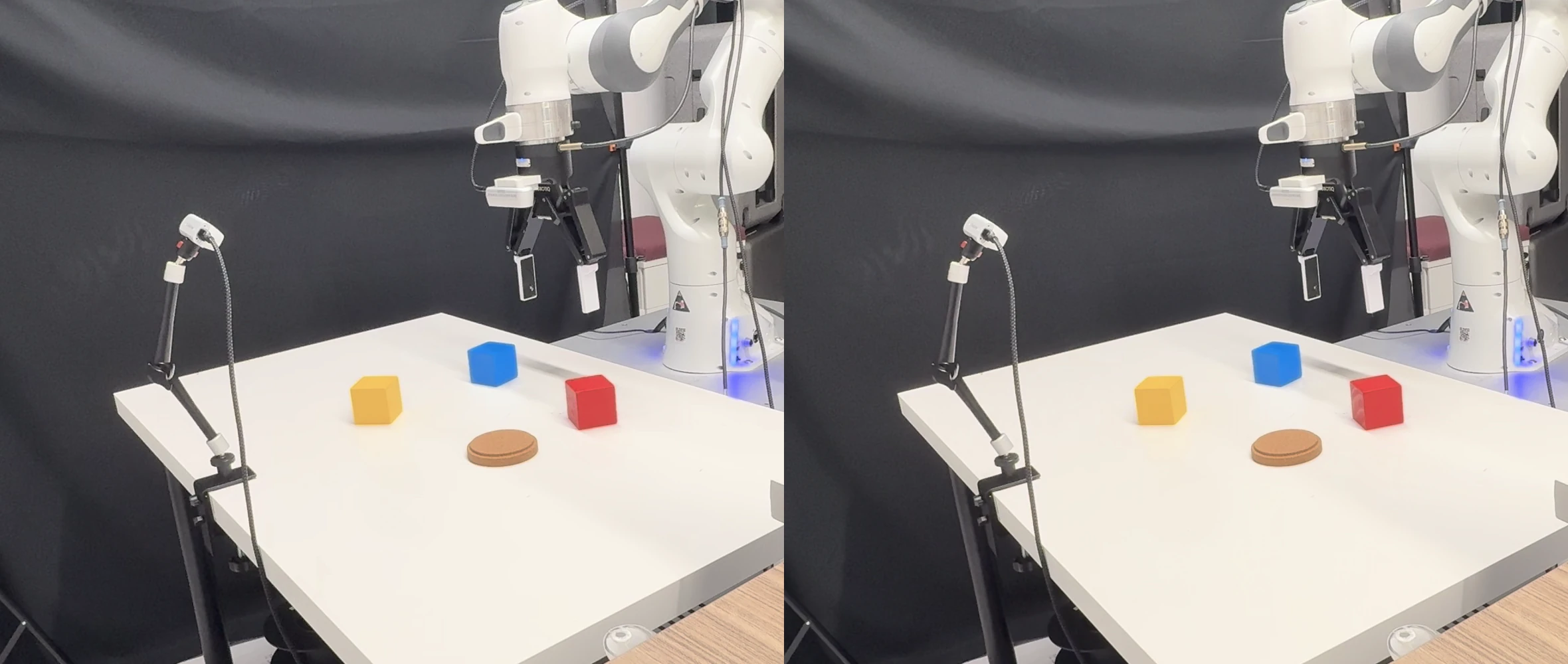
 GPT-6 Astra acting directly
00:00
Tower not built
SEEK same model
00:00
Red, yellow, blue tower stands



SEEK
Self-Evolution through Execution Knowledge
for Agentic Robot Manipulation
A robot that keeps what it learns from one attempt to the next, while the underlying model stays fixed.
1Nanyang Technological University 2Microsoft 3National University of Singapore
Real robot, Task 2Stack the red, yellow and blue cubes on the coaster, red at the bottom. The clocks show real time.
A general-purpose multimodal model can guide a robot through a task it was never trained on. It looks at the scene, tries something, reads the feedback, and adjusts. Over one attempt the robot finds out a good deal about the task. Then the attempt ends and all of it is gone, because it was held only in the model’s working context. The next attempt may take just as long and repeat the same mistakes.
SEEK keeps that knowledge. The model stays fixed. What changes from one attempt to the next is a set of executable procedures and a record of what each action did.
Abstract
General-purpose multimodal foundation models enable robots to adapt during deployment from observations and execution feedback, without task-specific demonstrations or training. However, the robot retains what it learns only in the model’s working context. Once the task ends, it loses this execution knowledge, such as how to carry a bowl between two grippers. On the next attempt at the task, the robot may take just as long and repeat the same mistakes. To avoid this repetition, robots must retain execution knowledge across attempts. Yet replaying past actions is insufficient, because their effects depend on the current conditions. Procedures that determine actions from the current scene address this, but when they meet conditions that earlier attempts did not cover, revising them requires the measured effects of earlier actions. We therefore propose SEEK, an agentic framework that retains both, enabling robots to improve across attempts while keeping the underlying model fixed. To adapt retained knowledge to the current scene, SEEK adopts a Self-Evolving Programmatic Policy (SEPP) that encodes manipulation as executable procedures and determines each action from current observations. As the robot executes these procedures, SEEK records the measured effects of its actions, including those from failed attempts, in a Persistent Action-Effect Bank (PAEB). Where a retained procedure applies, it acts without a model request; where it meets a condition it does not cover, this evidence guides its revision. On RoboDojo, SEEK reaches an average task score of 54.4 and a success rate of 48.0% across all 42 tasks, where the knowledge retained over ten attempts more than doubles SEEK’s task performance. With GPT-6.2 Astra, on 34 of these tasks, SEEK reaches 80.1 after five attempts, against 49.6 for the same model acting directly, and uses 77.6% fewer model requests.
Video
SEEK in three minutes.
Results
What it adds up to.
We test this on RoboDojo, a simulation benchmark of dual-arm manipulation tasks, with gpt-6.2-astra as the fixed model. The robot sees RGB images, with no depth and no object states, and it gets no demonstrations. SEEK is given five attempts at each of 34 tasks and is then evaluated on 340 episodes with layouts it has not seen. On the same episodes, the same model acts directly through the benchmark team's reference harness.
In the paper, with GPT-6 Astra on all 42 tasks, SEEK has the highest average score among the learned policies and agent-based methods compared.
Real robot
Beyond one model, and beyond simulation.
The gain does not depend on one model or on simulation. With Claude Opus 5.5 as the fixed model, three of the tasks go from 24.0 to 62.4. On a real Franka arm with four tabletop tasks, five attempts are enough for SEEK to score 83.3 where GPT-6 Astra acting directly scores 66.9, with about a third fewer model requests.
The problem
The same mistake, twice.
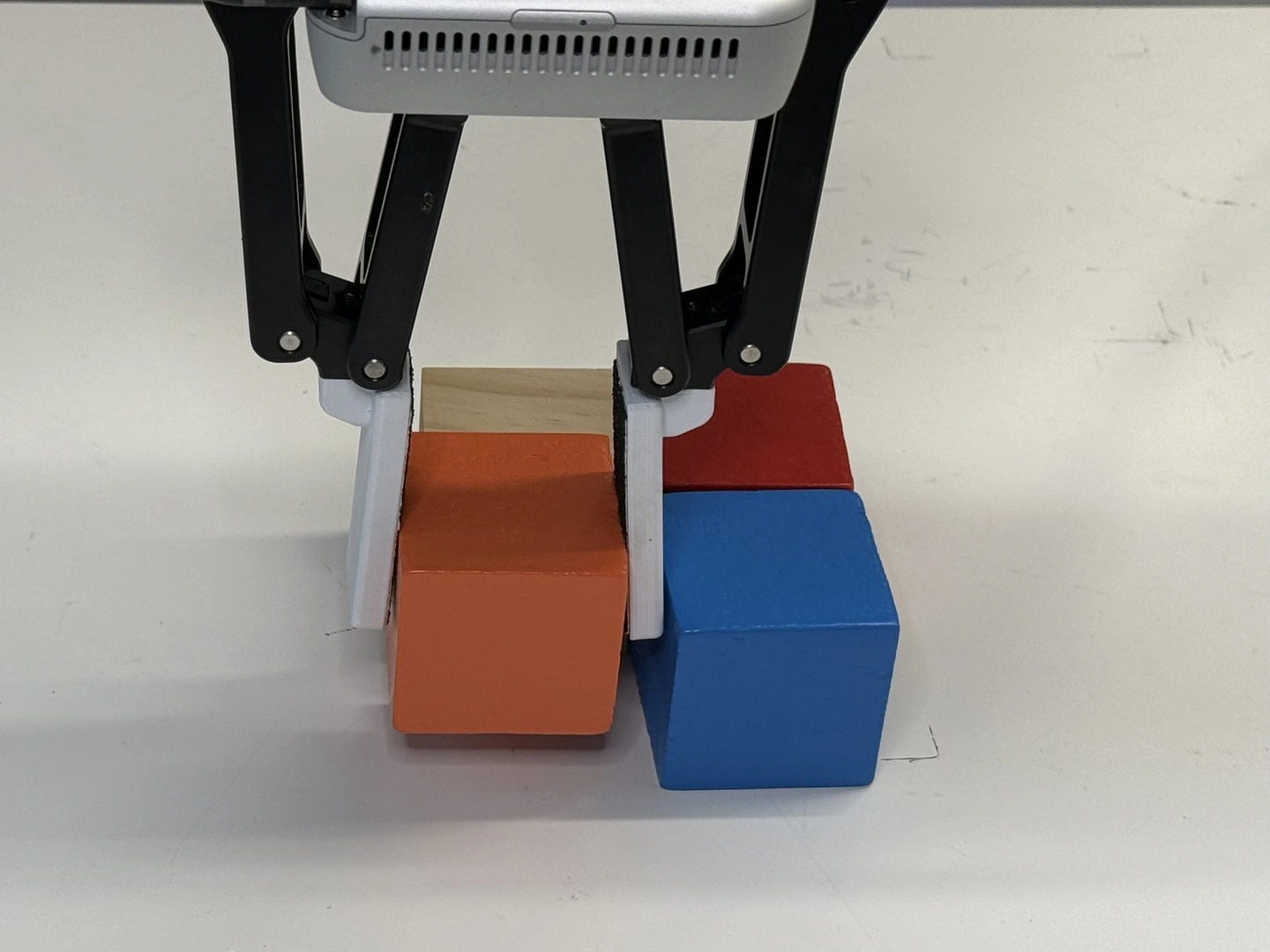
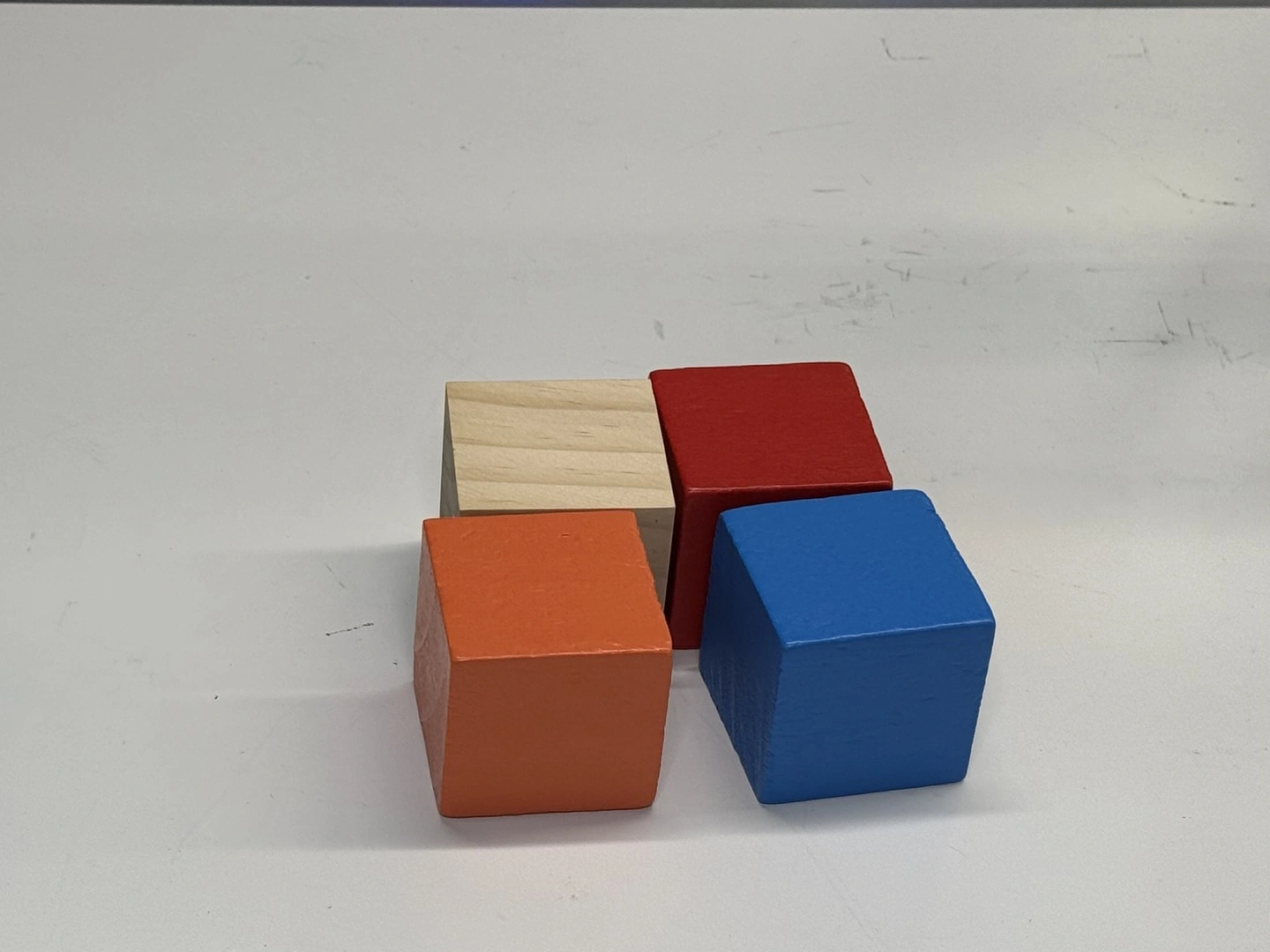
Take the fourth task on the same arm. Four cubes have to form a 2 × 2 square. The first three can simply be set down. The fourth is held between the fingers while it is lowered, so one finger ends up between it and its neighbour, and a gap is left when the gripper opens.
Within an attempt, the model can see the gap and try to correct it. Whatever it works out stays in its working context and is lost when the task ends. On the next attempt the cubes are laid out differently, the last cube is again lowered from a grasp, and the gap is there again.
One attempt
The next attempt, new layout
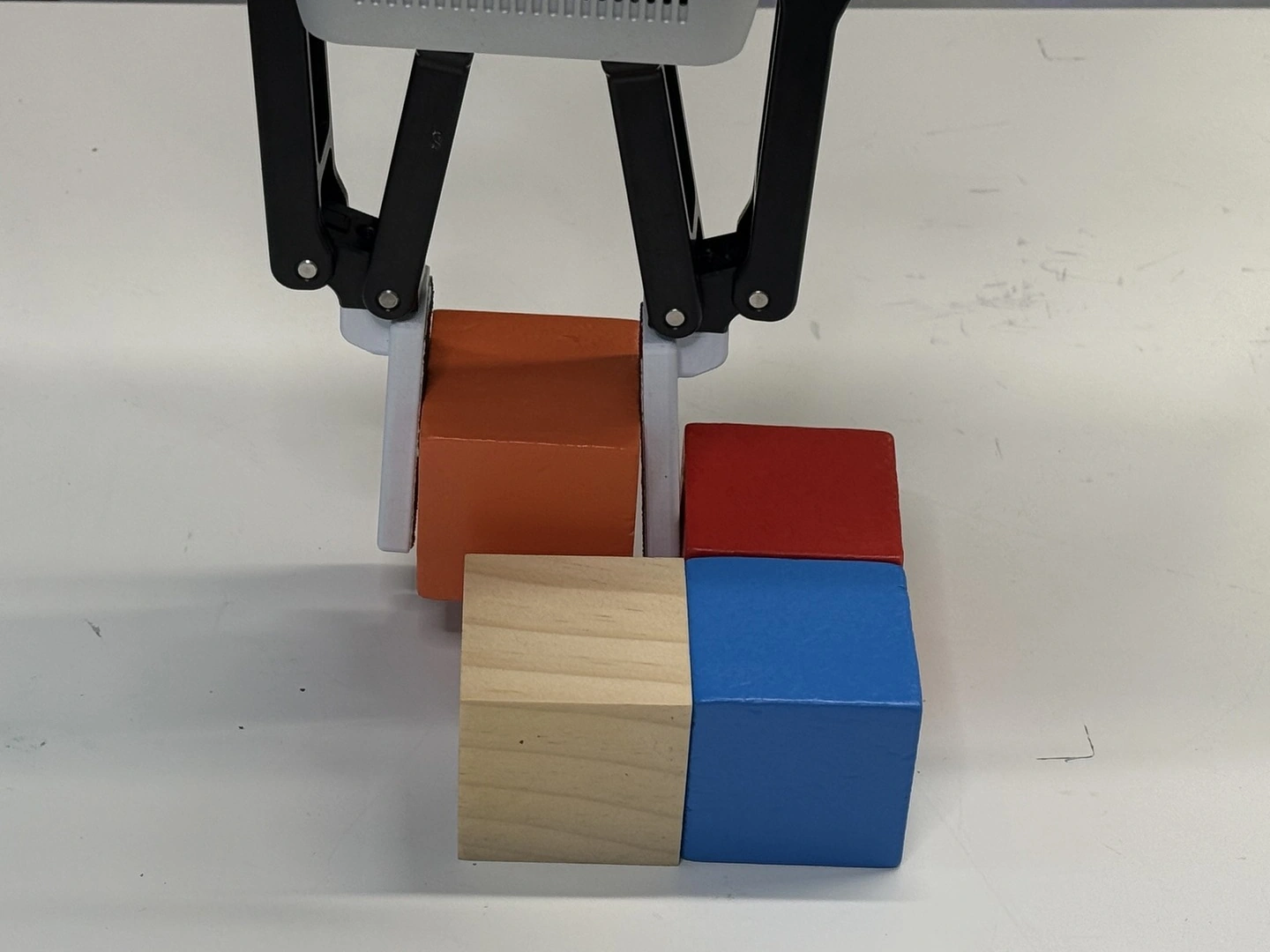
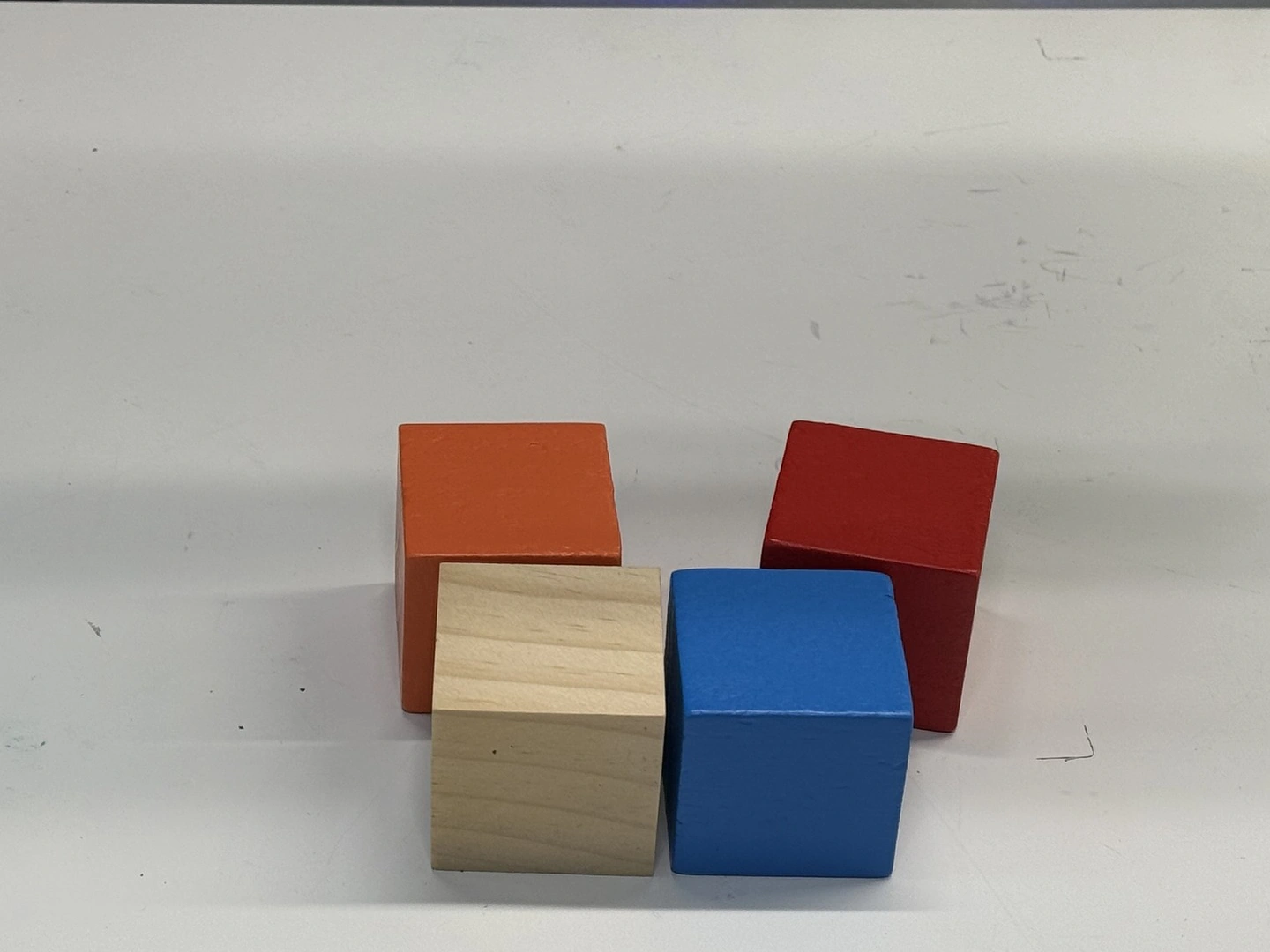
GPT-6 Astra acting directly, on a real Franka arm.
The idea
What is worth keeping.
The obvious remedy is to remember what was done and do it again. That stops working as soon as the scene changes. The cubes are somewhere else on the next attempt, and the same motion closes the gripper on an empty table. What an action does depends on the conditions it is taken in.
What does carry over is a procedure, a piece of code that reads the current scene and determines the action from it. Find the next cube in view, grasp it, place it in the next free slot. SEEK keeps such procedures in a Self-Evolving Programmatic Policy (SEPP). Where a retained procedure applies, the robot acts without a request to the model.
A procedure only covers the conditions it has met, and the first one written for the cubes has no answer to the gap. To revise it, the model needs to know what earlier actions produced, the failed ones included. So SEEK also records the measured effect of every executed action in a Persistent Action-Effect Bank (PAEB). The record of a placement that left a gap is the evidence from which the model adds a step that pushes the cube in, and the revision keeps a reference to that record.
SEPPprocedures
- find the next cube in view
- grasp it
- place it in the next slot
- push it into the slot if a gap is left
PAEBaction effects
- ✓grasp → cube held
- ✓place → cube in its slot
- ✗place → gap left
What SEEK holds after an attempt at the cube task, simplified. The highlighted step was added from the highlighted record.
The next attempt starts from both. The procedure places the last cube, the gap appears as before, and the added step closes the gripper and pushes the cube into its slot.
One attempt
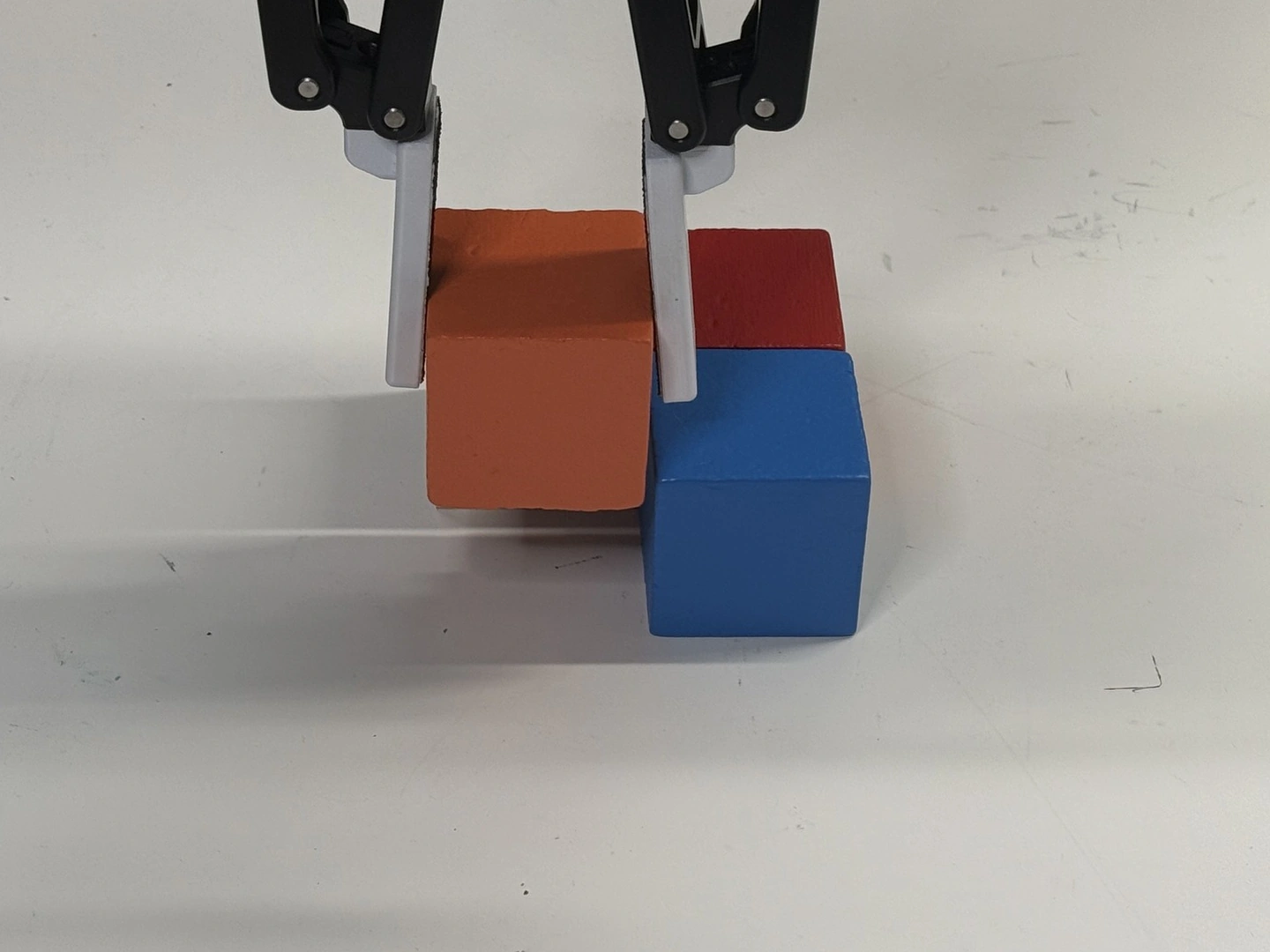
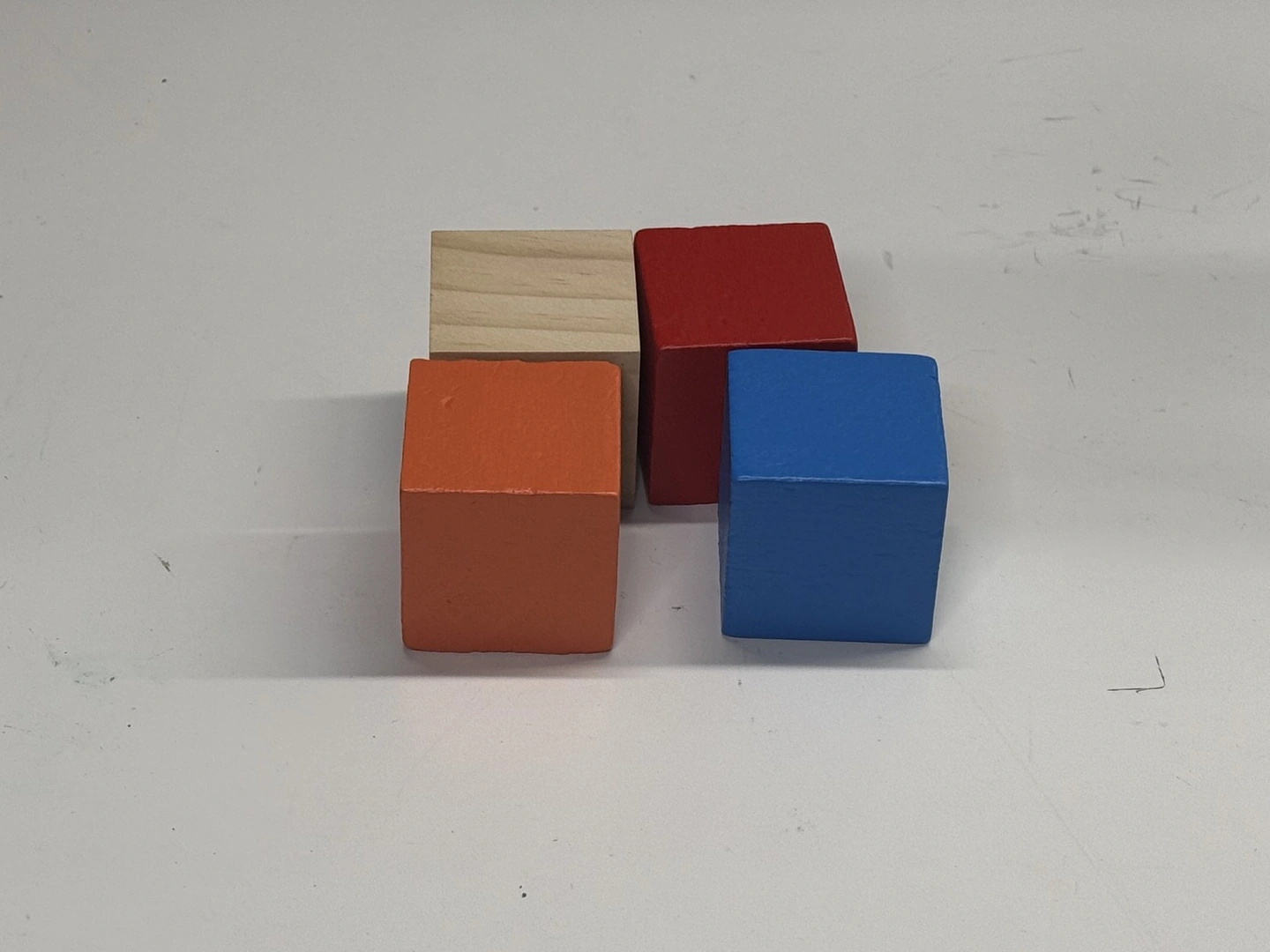
The next attempt, new layout
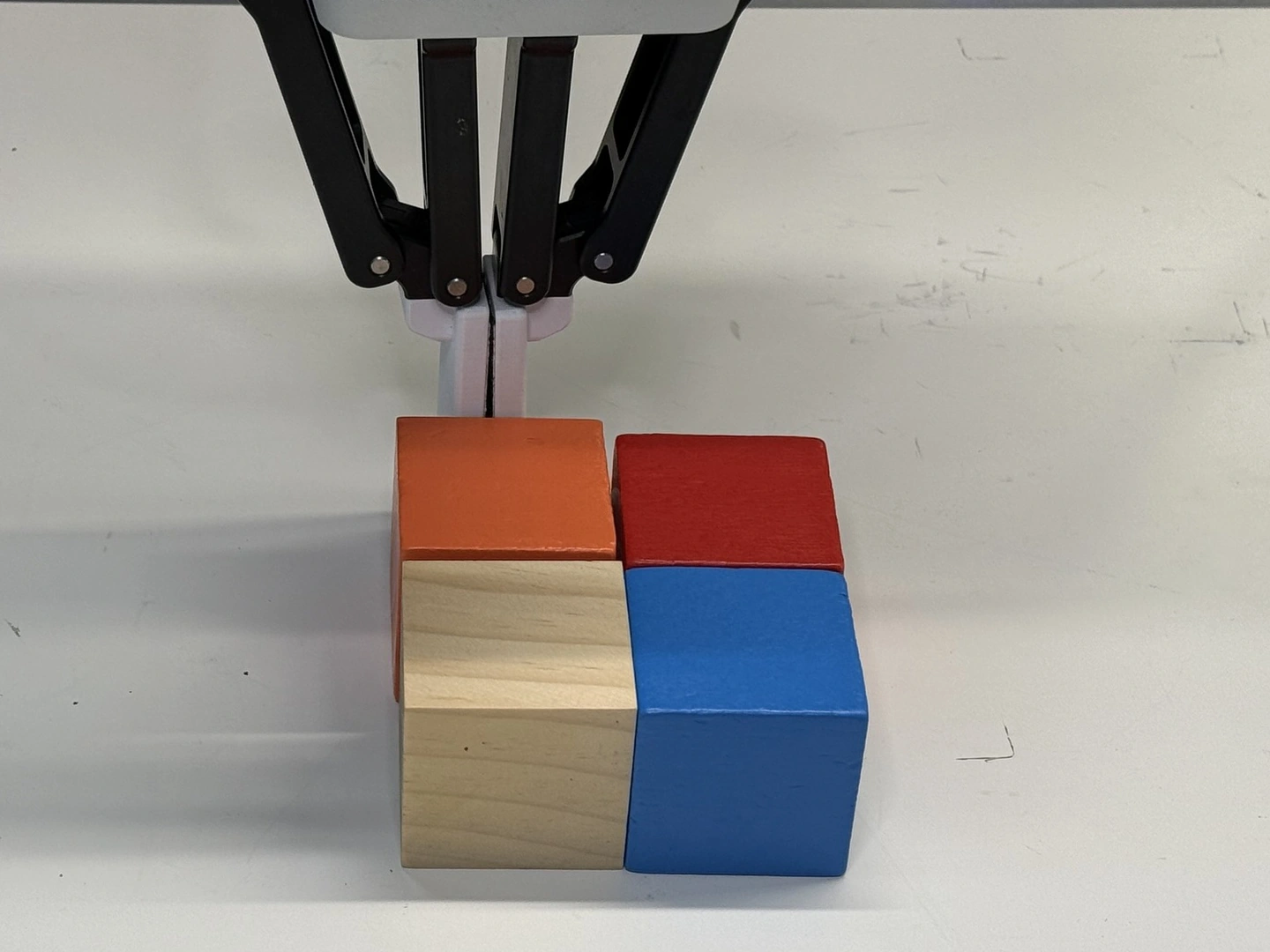
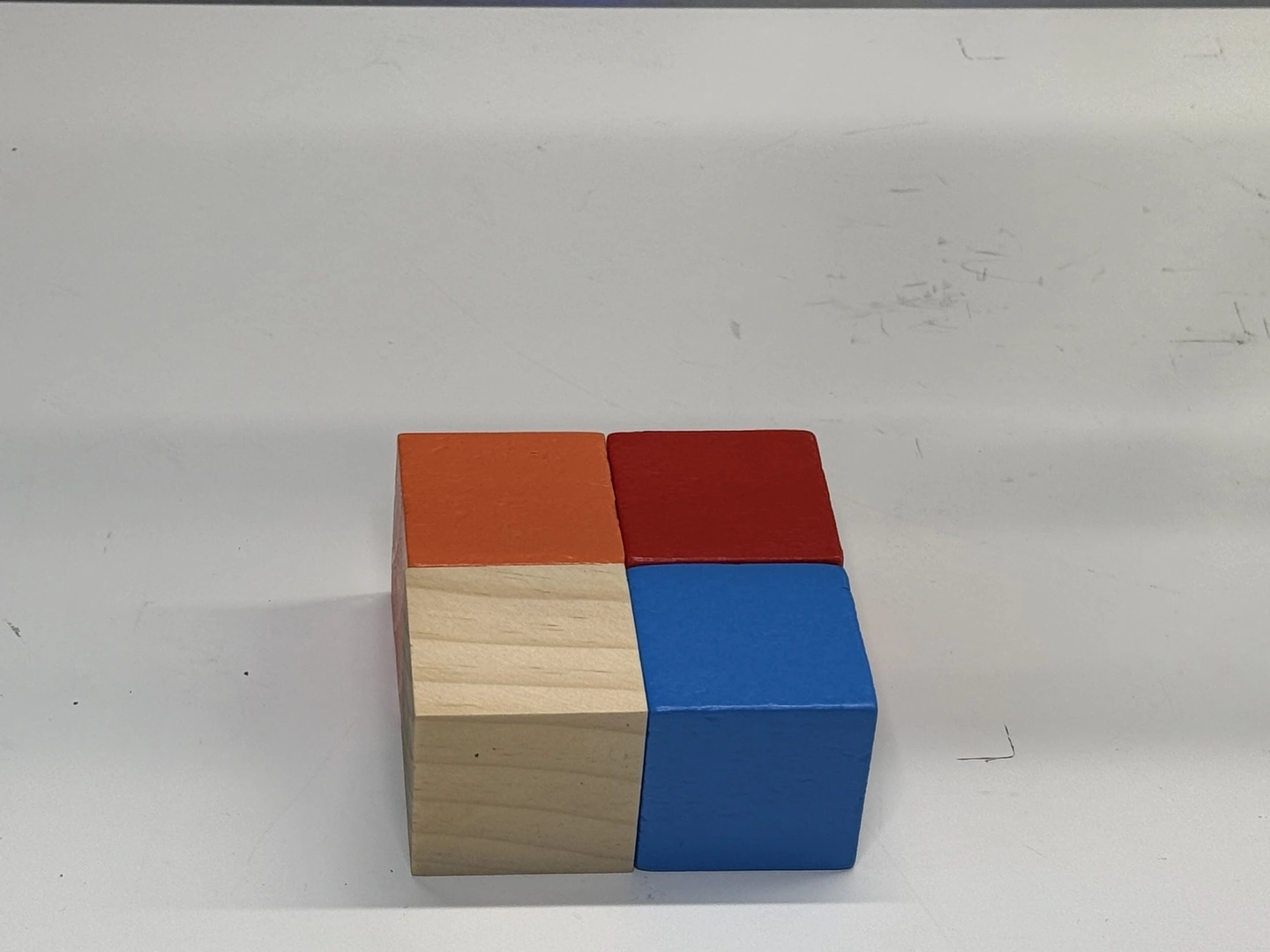
SEEK with the same model.
Method
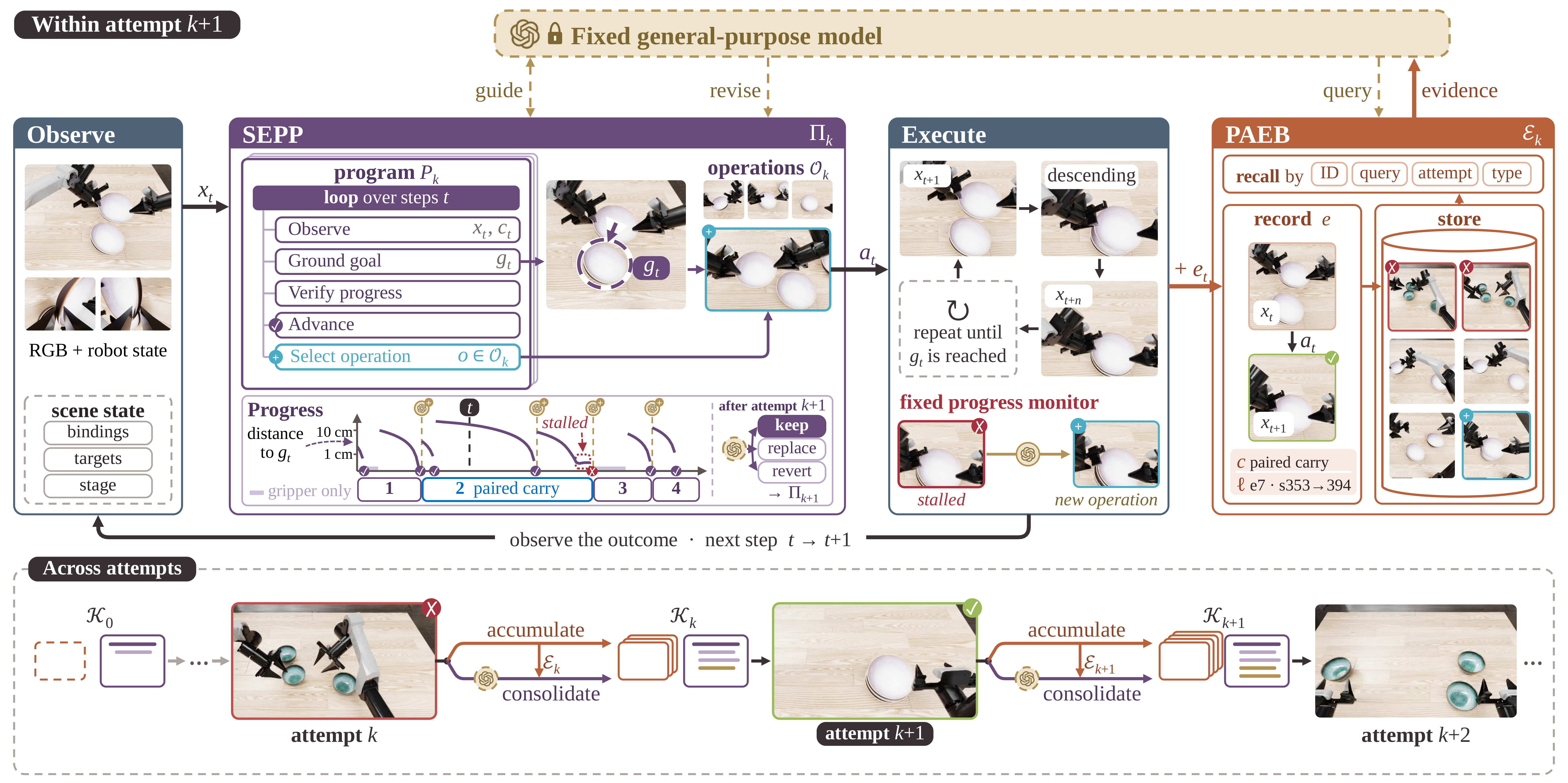
Inside one attempt.
-
Observe
Every step of an attempt runs the same loop. The robot observes RGB images and its own state.
-
Determine the action
SEPP’s main program grounds the current goal in the image, checks progress, and either advances or selects one of its named operations to produce the action.
-
Execute and record
The action is executed, and the observation before it, the action itself, and the observation after it go into PAEB as one record.
-
Ask the fixed model
The fixed model is called when a procedure asks for guidance. It is also called when a separate progress monitor finds that execution has stalled, and it can then revise the program or an operation on the spot.
-
Review the attempt
After the attempt, the model reviews the outcome and decides whether to keep, replace, or revert the program.
-
Start the next attempt
The next attempt begins in a fresh scene with the updated procedures and everything recorded so far.
-
The whole loop
Top, one step of an attempt. Bottom, what is carried from one attempt to the next.
Evaluation log
Five attempts, then new layouts.
The SEEK episodes behind the simulation results. SEEK makes five evolution attempts at each of 34 RoboDojo tasks, then plays ten episodes per task on seed 2 layouts it has not seen, 340 in all. Every episode starts from the same knowledge and writes nothing back.
SEEK / gpt-6.2-astra acting directly, on the same episodes
Select a task for the seed, layout, score, model requests and steps of each episode. Scores are the benchmark task scores; success and requests in the table are those of SEEK, and the Astra column is gpt-6.2-astra acting directly on the same episodes. A category averages its tasks and the average weights the four categories equally, as in the paper. Data: results.json, episodes.csv. gpt-6.2-astra acting directly on the same episodes: results.json, episodes.csv.
Release
Paper and code.
Paper
arXiv
How SEEK retains and revises execution knowledge, with the full evaluation.
Read on arXivCode
GitHub
The SEEK runtime, the 42 task configurations and the setup scripts.
Open on GitHubCite
BibTeX
The entry below, ready to paste into your references.
@article{guan2026seek,
  title   = {{SEEK}: Self-Evolution through Execution Knowledge
             for Agentic Robot Manipulation},
  author  = {Guan, Zeyang and Zhao, Qihao and Gong, Rui and Zhang, Haitian and
             Dai, Yalun and Huang, Yangyu and Xiao, Lingao and Du, Haozhe and
             Yu, Xuehui and Lu, Ye and Gao, Jianjun and Wang, Ruoyu and
             Bai, Haowen and Li, Hao and Li, Scarlett and Yap, Kim-Hui},
  journal = {arXiv preprint arXiv:2611.33915},
  year    = {2026}
}